Calculate crypto profit and loss before you assume any trade is successful.
Many traders celebrate price movements. Very few sit down and calculate their real outcome. In crypto trading, guessing your profit is dangerous. Measuring it accurately is professional.
If you want to trade consistently, you must calculate crypto profit and loss the right way — including fees, position size, and percentage returns.
Let’s break it down clearly.
Crypto Tools and Why Do They Matter in Today’s Market?
How to Calculate Crypto Profit and Loss Step by Step
To calculate crypto profit and loss, you need four things:
- Entry price
- Exit price
- Quantity purchased
- Total trading fees
The basic formula is simple:
Profit or Loss = (Exit Price − Entry Price) × Quantity
Example:
You buy Bitcoin at $25,000.
You sell Bitcoin at $28,000.
You hold 0.4 BTC.
Now calculate:
(28,000 − 25,000) × 0.4
= 3,000 × 0.4
= $1,200
Your gross profit is $1,200.
But this is not your final number yet.
Calculate Crypto Profit and Loss Including Fees
Every exchange charges fees on buying and selling.
Assume:
- Entry fee: $30
- Exit fee: $30
Total fees = $60
Now subtract fees:
$1,200 − $60 = $1,140
Your real net profit is $1,140.
When traders ignore fees, they slowly lose hidden capital over time.
Always calculate crypto profit and loss after deducting trading costs.
How to Calculate Crypto Loss Correctly
Loss calculation uses the same formula.
Example:
You buy Ethereum at $1,800.
Price drops to $1,650.
You hold 5 ETH.
(1,650 − 1,800) × 5
= (−150) × 5
= −$750
You lost $750.
This number tells you whether your risk was acceptable.
Professional traders calculate loss potential before entering a trade.
Calculate Crypto Profit Percentage for Better Clarity
Dollar amounts can be misleading.
Profit percentage gives better insight.
Formula:
Profit Percentage = (Net Profit ÷ Total Investment) × 100
If you invested $10,000 and earned $1,000:
(1,000 ÷ 10,000) × 100
= 10%
Percentage comparison helps you evaluate performance across multiple trades.
A $500 gain on $2,000 capital is stronger than $1,000 gain on $20,000 capital.
Why You Should Calculate Crypto Profit and Loss Before Entry
Most beginners calculate after closing a trade.
Smart traders calculate before opening it.
Before entering, ask:
- What is my target price?
- What is my stop loss?
- What is my risk per trade?
- Is this trade worth the exposure?
If your potential loss is higher than acceptable limits, skip the trade.
When you calculate crypto profit and loss in advance, you remove emotional trading decisions.
Common Mistakes While Calculating Crypto Profit and Loss
1. Ignoring Position Size
A $1,000 move means nothing without quantity.
2. Forgetting Leverage Impact
Leverage multiplies both profit and loss.
If using 5x leverage, a 5% market move becomes 25% impact on your capital.
3. Not Tracking Cumulative Performance
Single trade results do not define long-term success.
Track weekly and monthly profit percentages.
4. Overestimating Unrealized Gains
Open trade profit is temporary.
Only closed trades count as real returns.
Using Crypto Trading Tools to Improve Accuracy
Manual calculations are useful for understanding fundamentals.
But using crypto trading tools improves precision and speed.
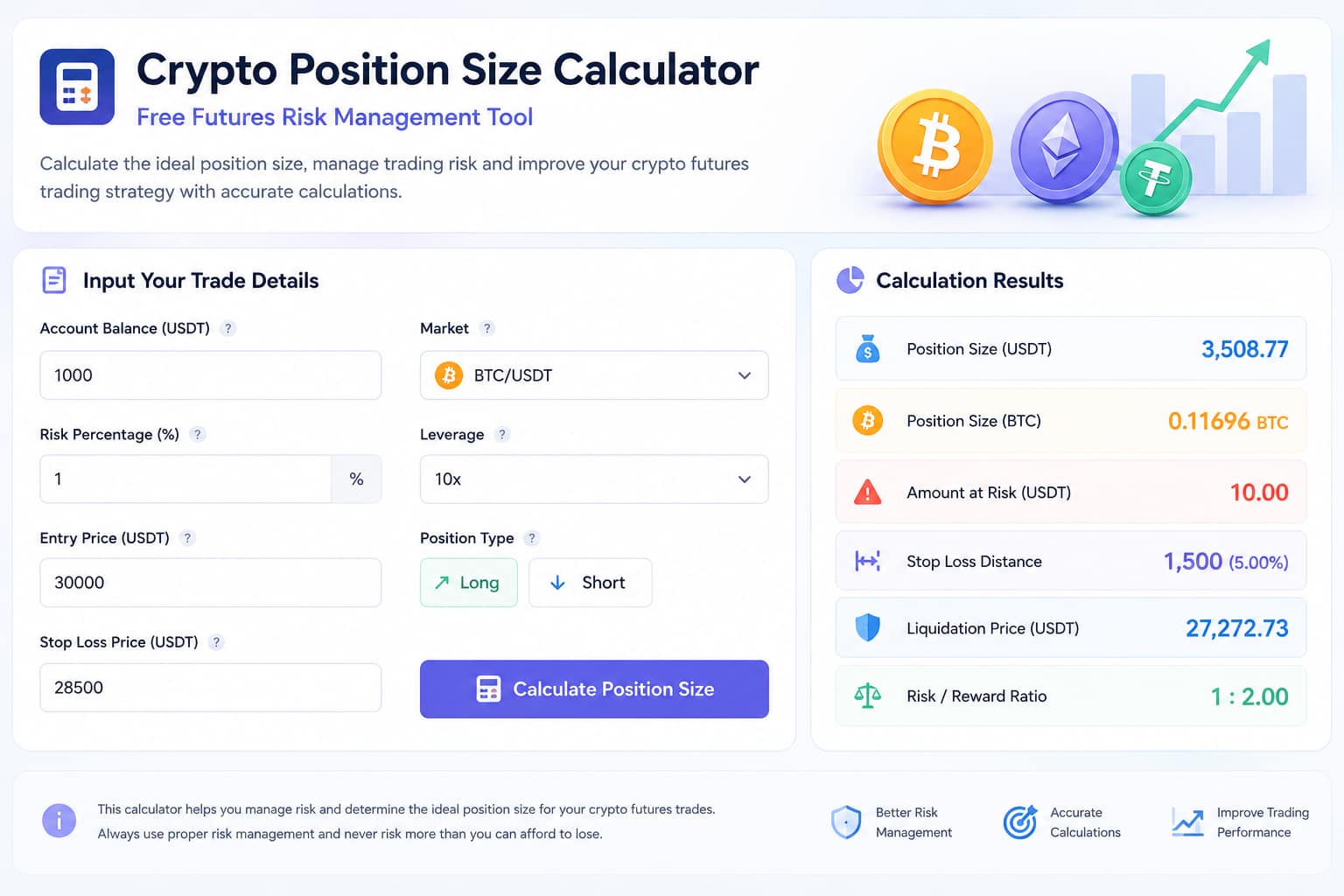
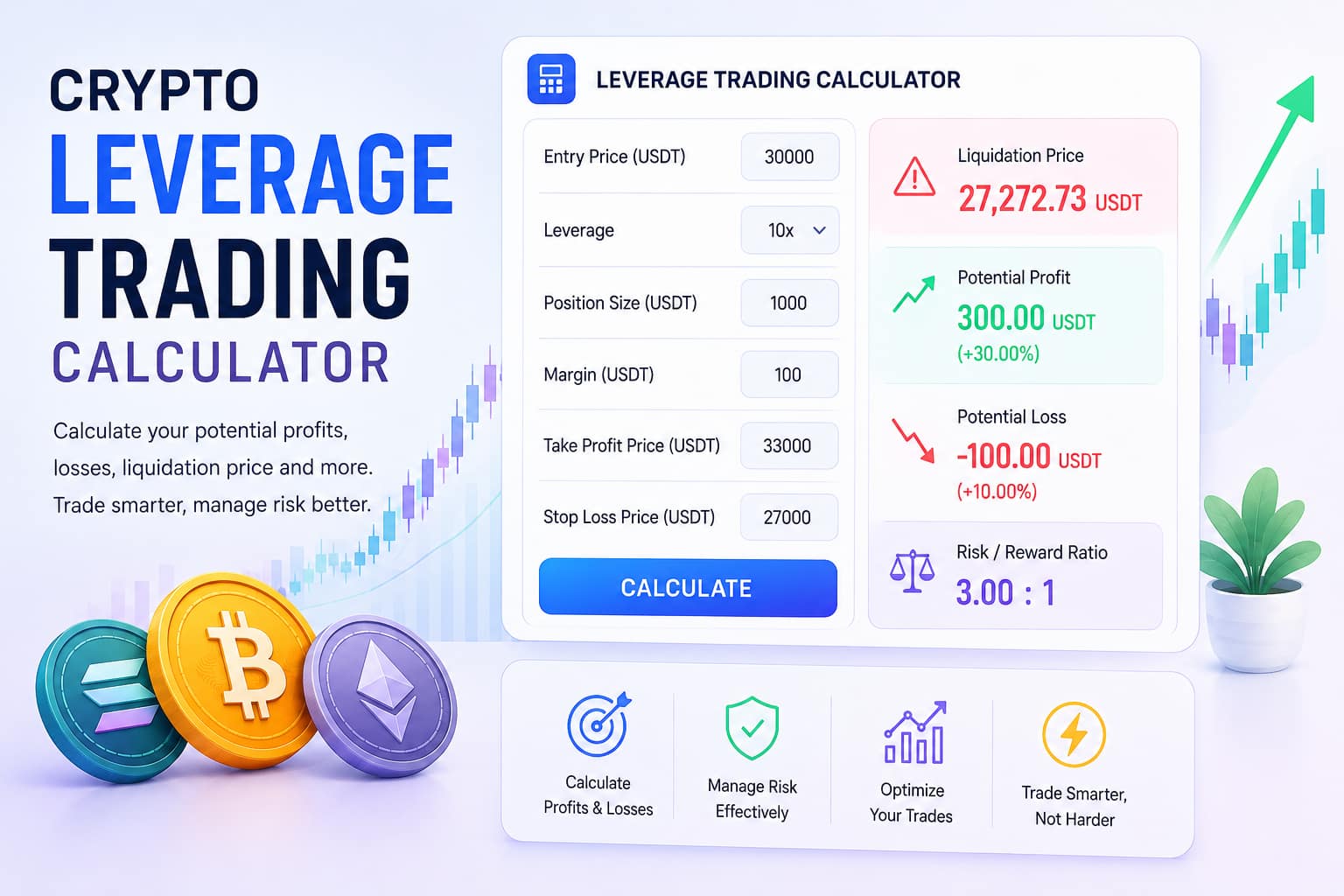
A structured crypto profit calculator allows you to:
- Enter entry and exit price
- Add quantity
- Include fee percentage
- See net profit instantly
- Compare different trade scenarios
When tools support your strategy, mistakes reduce significantly.
Combine Profit Calculation with Risk Management
Profit calculation alone is incomplete.
Successful trading requires combining:
- Profit estimation
- Risk reward ratio
- Break-even analysis
- Position sizing
When you calculate crypto profit and loss within a complete strategy framework, you build consistency.
Final Thoughts
Calculate crypto profit and loss every single time you trade.
Do not rely on emotions.
Do not rely on price excitement.
Do not rely on guesswork.
Numbers create clarity.
Clarity creates discipline.
Discipline creates long-term growth.
If you measure every trade carefully, you stop gambling and start trading professionally.